Chelation surrounds a metal ion (Fe, Zn, Mn, Cu, Ca, Mg) with an organic molecule so it stays plant-available in solution instead of precipitating out or being locked up by soil pH. Different chelating agents hold their metal stable across different pH ranges — this, not the metal itself, is usually the real differentiator between products in this category.
21 products are listed in this category: 9 in the Gold tier and 12 in the Platinum tier. Gold-tier formulations are specified by composition; Platinum-tier products are field-ready blends. NPK grades listed: 20-20-20, 12-6-42, 12-12-36. Pack sizes listed for these products: 1 kg, 2 kg, 2.5 kg, 5 kg, 10 kg, 15 kg, 25 kg. Each product page gives its specifications and packaging, and controlled copies of the TDS and SDS are supplied for the requested market and formulation.
EDTA Chelates
EDTA is a highly reliable and popular chelating agent, keeping iron and other micronutrients fully stable and plant-available up to pH 7.5. It is the ideal, standard solution for neutral and mildly acidic soils.
Other Chelates (EDDHA/DTPA)
EDDHA represents the premium choice for alkaline and calcareous soils, maintaining iron stability all the way up to pH 10. DTPA provides excellent stability up to pH 7.5, ensuring optimal nutrient availability in challenging soil conditions.
Multi-Micronutrient Mixes
Multi-micronutrient mixes combine complementary trace elements to prevent or correct compound deficiencies. Chelate selection and element ratios are specified around crop demand, soil pH, water chemistry, and the intended foliar or fertigation application route.
Tell us the quantity, packaging and destination you need, and our team will reply by email.
Request a quote for Chelated MicronutrientsProducts in this category21

EDTA Zn
Zinc bound to EDTA, the standard synthetic chelating agent, keeping zinc plant-available in solution up to roughly pH 6.5-7.5 rather than precipitating out as it would in an unchelated salt. Zinc deficiency shows first in new growth as shortened internodes and interveinal chlorosis ("little leaf"), a common issue in high-pH or high-phosphorus soils that lock up free zinc. Chelation gives more reliable foliar and fertigation uptake than sulfate forms under those conditions.

EDTA Mn
Manganese bound to EDTA, keeping the nutrient in plant-available form for foliar or fertigation delivery up to roughly pH 6.5-7.5. Manganese deficiency appears as interveinal chlorosis on middle-to-young leaves, most common on high-pH or poorly aerated soils where manganese becomes chemically unavailable regardless of total soil content. Chelation avoids the fixation that limits sulfate-form manganese in those same conditions.

EDTA Fe
Iron bound to EDTA, the most common and cost-effective iron chelate, stable and plant-available up to roughly pH 6.5 — the classic correction for iron chlorosis, which shows as interveinal yellowing in the youngest leaves since iron is nearly immobile within the plant. EDTA-Fe is the standard first choice for moderate-pH soils; above pH 6.5-7 its stability drops off sharply, which is where DTPA- or EDDHA-chelated iron becomes necessary instead.

EDDHA Fe 6%
Premium ortho-ortho (o-o) isomer ratio options available: 1.8 / 2.4 / 3.0 / 3.6 / 4.2 / 4.8. EDDHA Fe 6% — Stable to pH 9-10 in Calcareous Soils

EDTA Cu
Copper bound to EDTA, keeping the nutrient plant-available for foliar or fertigation delivery up to roughly pH 6.5-7.5. Copper deficiency shows as dieback and distorted new growth, particularly in high-organic-matter or sandy soils with naturally low copper reserves. Chelation prevents the antagonism copper otherwise shows with phosphorus and iron uptake when applied as a simple salt.

EDTA Ca
Calcium bound to EDTA, the standard synthetic chelating agent, stable and plant-available up to roughly pH 6.5-7.5. Because calcium moves through the plant almost entirely in the xylem and barely at all in the phloem, tissues furthest from the water stream — fruit tips, inner leaves, new growth — are the first to show deficiency even when soil calcium is adequate. EDTA chelation keeps the calcium in plant-available form for foliar or fertigation delivery to those tissues, with stronger chelating capacity than amino-acid-carried alternatives, though it is subject to the same upper pH stability limit as other EDTA-chelated nutrients.

EDTA 4Na
Tetrasodium EDTA — Chelating Agent and Water Conditioner

EDTA 2Na
Disodium EDTA — Chelating Agent and Sequestrant

Manganese EDTA 13%
Organic Slow-Release Granular and Powder Fertilizer for Agriculture

EDTA-MgNa₂ (Magnesium Chelate)
Premium Magnesium Chelate for Enhanced Photosynthesis

EDTA-CaNa₂ (Calcium Chelate)
High-Quality Calcium Chelate for Enhanced Plant Health
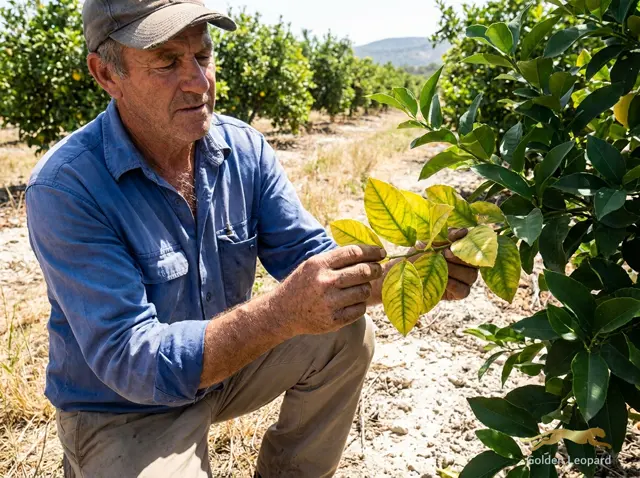
EDDHA Fe 6% (O-O 1.8–4.8%, CAS 16455-61-1)
Superior Chelated Iron for Challenging Soils

EDTA-MnNa₂ (Manganese Chelate)
High-Quality Manganese Chelate for Enhanced Photosynthesis

EDTA-CuNa₂ (Copper Chelate)
High-Quality Copper Chelate for Crop Nutrition

EDTA Multi-Micronutrient Chelate
Balanced Multi-Micronutrient Chelate for Various Crops

EDTA-ZnNa₂ (Zinc Chelate)
High-Quality Zinc Chelate for Enhanced Plant Nutrition

NPK 20-20-20 + TE (Chelated Micronutrients)
Balanced All-Purpose Fertilizer for All Growth Stages

NPK 12-6-42 + TE (Fruit Sweetness)
High-Potassium Water-Soluble Fertilizer for Fruit Sweetness

EDDHA Fe 6% (O-O 4.8%, CAS 16455-61-1)
Essential Nutrients for Healthy Plant Growth

NPK 12-12-36 TE Grow
Professional-Grade Fertilizer for Superior Crop Nutrition

EDDHA Fe 6% (O-O 4.8%, pH 7.0–9.0)
O 4.8 | Dark Red Powder | 100% Soluble