
EDTA Ca
EDTA-Chelated Calcium
 AI-generated image
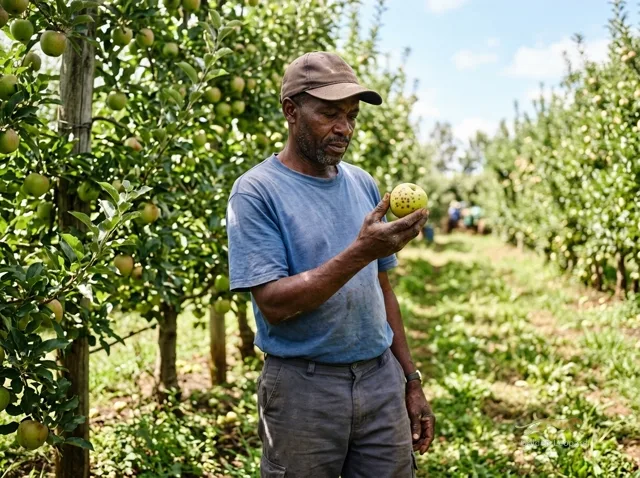
Calcium bound to EDTA, the standard synthetic chelating agent, stable and plant-available up to roughly pH 6.5-7.5. Because calcium moves through the plant almost entirely in the xylem and barely at all in the phloem, tissues furthest from the water stream — fruit tips, inner leaves, new growth — are the first to show deficiency even when soil calcium is adequate. EDTA chelation keeps the calcium in plant-available form for foliar or fertigation delivery to those tissues, with stronger chelating capacity than amino-acid-carried alternatives, though it is subject to the same upper pH stability limit as other EDTA-chelated nutrients.
- Stable and plant-available up to approximately pH 7.5
- Targets calcium-deficiency disorders in low-mobility tissues (e.g. blossom-end rot, tip-burn, bitter pit)
Available in 1 kg, 5 kg and 25 kg moisture-proof bags. Storage: Store in a cool, dry place away from sunlight and humidity.
Technical Data Sheet
Controlled copies are supplied for the requested market and formulation.
Safety Data Sheet
Controlled copies are supplied for the requested market and formulation.
Chelation surrounds metal nutrients (Fe, Zn, Mn, Cu, Ca, Mg) with protective organic molecules, keeping them fully soluble and plant-available across a wide range of soil pH levels to ensure effective nutrient delivery.
EDTA Zn
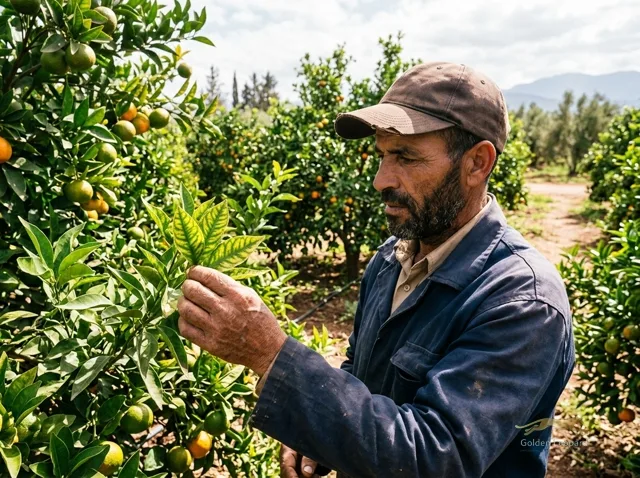
Zinc bound to EDTA, the standard synthetic chelating agent, keeping zinc plant-available in solution up to roughly pH 6.5-7.5 rather than precipitating out as it would in an unchelated salt. Zinc deficiency shows first in new growth as shortened internodes and interveinal chlorosis ("little leaf"), a common issue in high-pH or high-phosphorus soils that lock up free zinc. Chelation gives more reliable foliar and fertigation uptake than sulfate forms under those conditions.

EDTA Mn
Manganese bound to EDTA, keeping the nutrient in plant-available form for foliar or fertigation delivery up to roughly pH 6.5-7.5. Manganese deficiency appears as interveinal chlorosis on middle-to-young leaves, most common on high-pH or poorly aerated soils where manganese becomes chemically unavailable regardless of total soil content. Chelation avoids the fixation that limits sulfate-form manganese in those same conditions.

EDTA Fe
Iron bound to EDTA, the most common and cost-effective iron chelate, stable and plant-available up to roughly pH 6.5 — the classic correction for iron chlorosis, which shows as interveinal yellowing in the youngest leaves since iron is nearly immobile within the plant. EDTA-Fe is the standard first choice for moderate-pH soils; above pH 6.5-7 its stability drops off sharply, which is where DTPA- or EDDHA-chelated iron becomes necessary instead.